

Vance walks away in Islamabad. I didn’t know the Americans had it in them. Where does that leave us?
The track below shows the path this morning of a Pakistani-flagged oil tanker, SHALAMAR, into the Strait of Hormuz. The good news: the flow of tankers into the Strait is the key thing. You need new tankers to unwind the current 13-million-barrel-a-day shutdown of Gulf oil. This matters more than the three tankers, laden with 6m barrels of oil, that left the Strait yesterday. The bad news: the route.
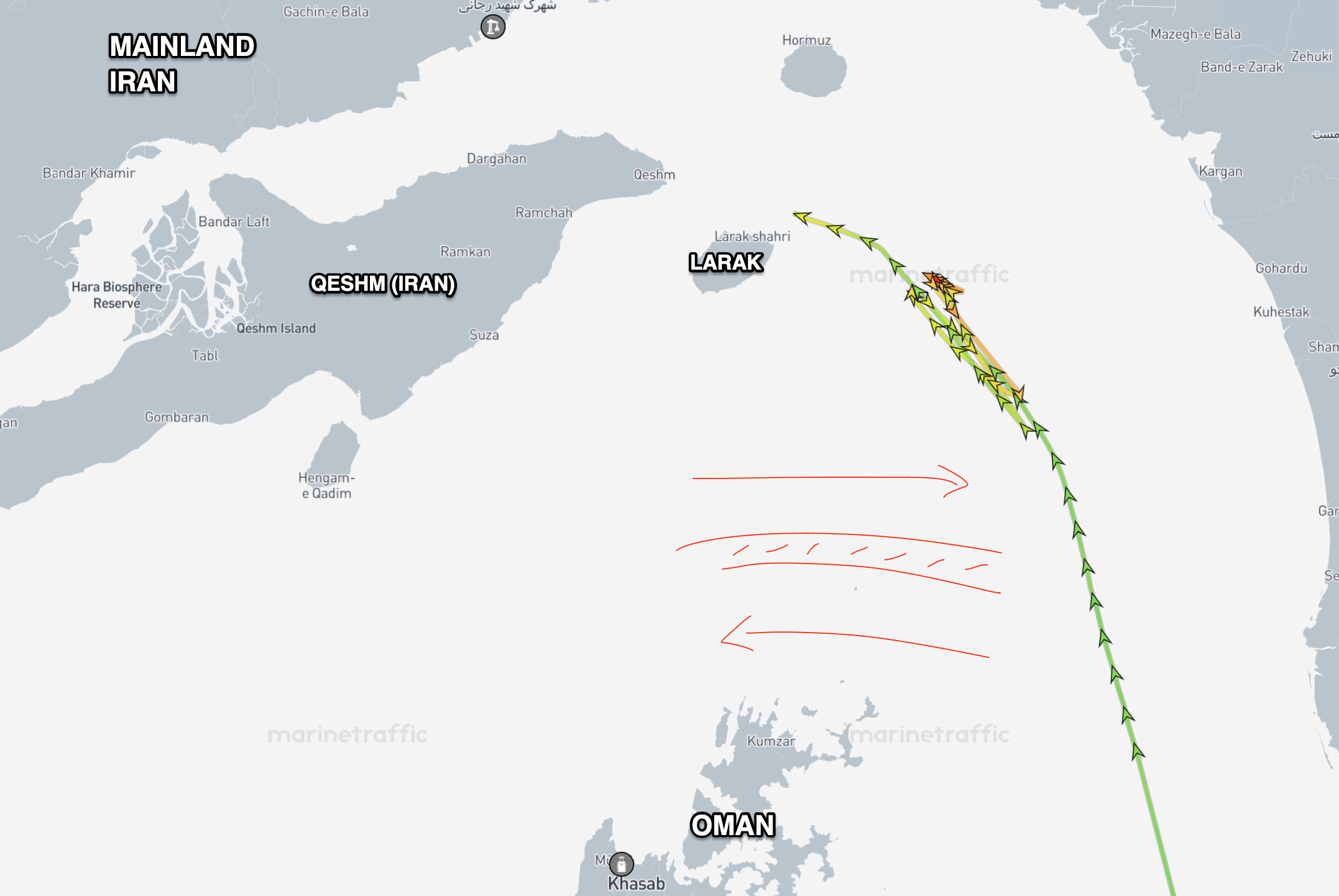
I’ve marked the typical pre-war path of ships in red. SHALAMAR is following the new route mandated by Iran, between Larak and the shark-shaped island of Qeshm. The departing tankers also followed the Iranian route yesterday.
Another tanker has already made it through. A third turned back after the US broke off talks; SHALAMAR almost gave up too. A fourth tanker, also Pakistani-flagged, is now making its way in at Iran’s discretion.
Iran’s control of the Strait is not going to be sustainable, as the countries of the Gulf have made clear. Here’s the UAE’s relevant minister, posting an hour or so ago: “The Strait of Hormuz has never been Iran’s to close or restrict… The world simply cannot afford it and must not allow it.”
You need two things for the world’s oil supply to come back online: Iran to allow ships to pass unimpeded, and Gulf suppliers to agree to load them up with oil.
Gulf countries, as past oil crises made clear, can cut exports and still thrive as prices subsequently spike, or stay elevated. A reminder of global oil supply. Gulf suppliers in gold:
You need two to TACO, analysts pointed out over the past month as people speculated about a Trump withdrawal akin to his (partial) tariff backdown last year. Iran had a vote too. The same applies now: the Gulf has a vote on the Strait.
Saudi Arabia and the UAE, as noted on day 40, have bypass pipelines that are allowing them to maintain material exports. Their export volumes are down by a quarter to a third, but the pre-war price of physical barrels has doubled~.
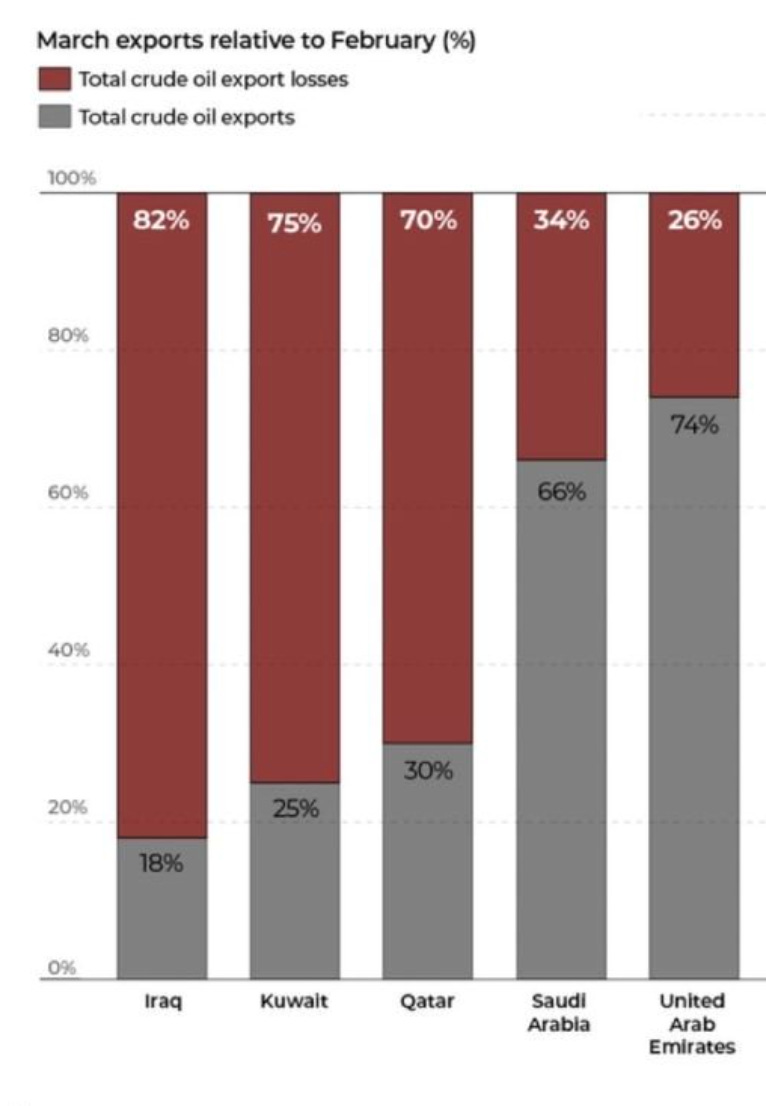
If Iran remains a threat to the Strait, they can withhold supply, keeping prices high.
Trump is, as ever, soloing his way through a free jazz session. Asked about the Strait on Friday, he went within seventeen seconds from “that’ll open up automatically… if we just left,” to “it won’t be easy. I will say this, we will have that open – fairly soon.” The guy has no idea. He didn’t intend to be here.
“The Iranians don’t seem to realize they have no cards, other than a short term extortion of the World by using International Waterways,” he subsequently posted.
Trump’s chief economic adviser, Kevin Hassett, was no more convincing on Fox earlier in the day. Asked whether the Strait could be opened within two months, all he could say was “yes… we’re very, very hopeful.” The A-team, he said, was on their way to Islamabad for talks with the Iranians. So much for those.
We already know what Trump thinks of the talks. “He’s working on the deal,” he said of Vance last week. “If it doesn’t happen, I’m blaming [him]. If it does, I’m taking full credit… I think it has to happen. They’re desperate.”
Iran isn’t. But I’m not sure Trump is either. He has, after all, laid out his view on clearing the Strait before: 29 years ago, when US naval convoys were engaged in protecting Kuwait-owned oil tankers from Iraqi attack. Here’s what he said then in a full-page ad he took out in the New York Times and elsewhere:
“For decades, Japan and other nations have been taking advantage of the United States. The saga continues unabated as we defend the Persian Gulf, an area of only marginal significance to the United States for its oil supplies, but one upon which Japan and others are almost totally dependent. Why are these nations not paying the United States…? Saudi Arabia, a country whose very existence is in the hands of the United States, last week refused to allow us to use their mine sweepers… The world is laughing at America’s politicians as we protect ships we don’t own, carrying oil we don’t need, destined for allies who won’t help.”
Is Trump going to restart a war he’s bored by to clear a Strait he doesn’t think America needs? “Don’t forget, we don’t use the Strait – other countries use the Strait,” he reiterated on Friday.
Trump is now reposting suggestions that the US blockade Iranian oil. Robin Brooks, the macro strategist, advanced that idea on here weeks ago, noting that Iran’s export-driven economy is entirely dependent on oil and gas (Iran is the world’s #4 gas supplier, behind the US, Russia and China). Others agree with him.
This would be some shift. Trump lifted sanctions on Iranian oil on day 20. That was designed to lower oil prices (more Iran oil = more global supply) but all it did is withdraw any pressure on Iran to open the Strait.
Remember: Trump’s Tuesday night ceasefire was supposed to be conditional on a full reopening of the Strait. That’s why the price of oil fell 16 per cent and stocks surged. Oil has stayed down even as the new reality in the Strait has become clear.
Energy analysts are sceptical this will last. Here’s Amrita Sen, last seen in Empire Hour interviewing Jeff Currie, talking to CNBC on Thursday:
“Once the dust settles, and people realise the ceasefire actually doesn’t mean we’re going to get a material flow of oil out of the [Strait of] Hormuz, we think prices will go back up again. Unless we reverse the 13 million barrels per day of [Gulf production] shut-ins, we are losing that much volume… every single day – and that means we just need higher and higher prices ultimately to balance the market.”
Sen makes another subtle point: you need tankers to export oil out of the Strait – and many of them are now en route to the US or Europe, taking oil to Asia or Australia. “For the ships to go back,” she said, “it’s at least June” until they’ll arrive. That’s 7 weeks.
The American stock market has moved on, such is the perceived strength of AI demand. (Taiwan Semi, the world’s leading edge chip manufacturer, reported blowout monthly revenue growth on Friday: revenue is up a third over the first quarter year-on-year – a growth rate that would make the British stock market keel over in shock.)
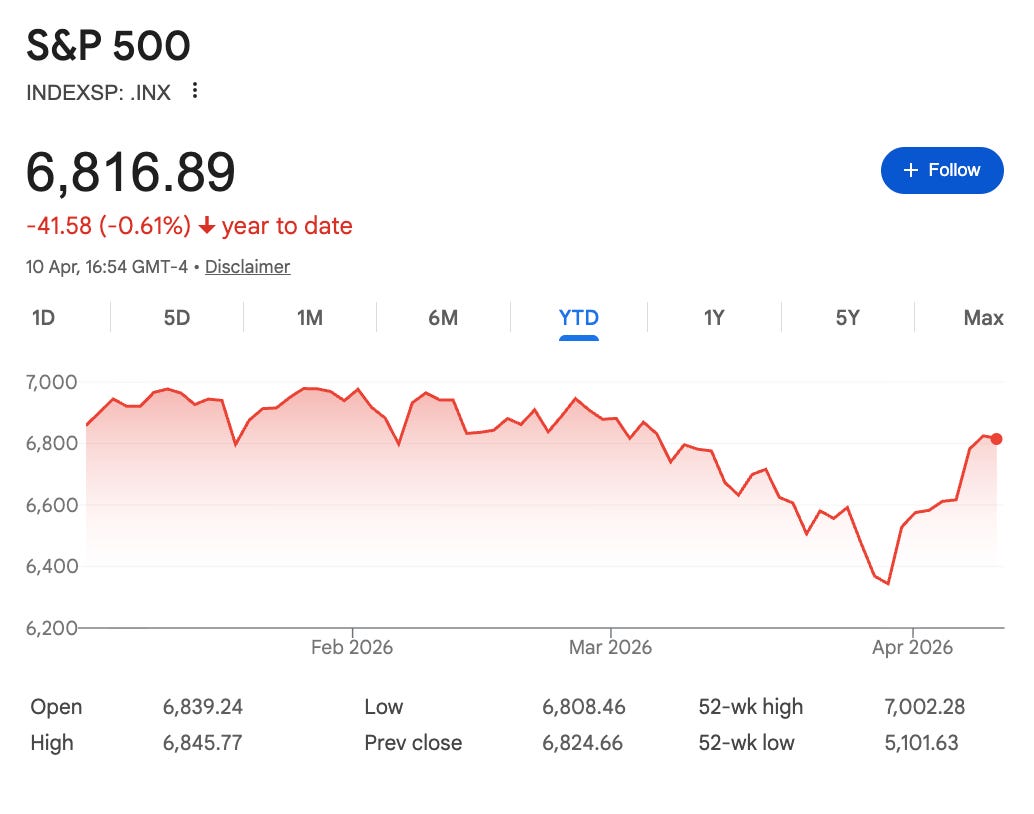
Can this calm last? The AI trade is power-dependent. The 9 per cent dip in March was nothing. Stocks typically fall almost 15 per cent intra-year, going back to 1950. The market fell less than that – and is now back up – despite this being, in theory, the biggest energy shock of our lifetimes with no resolution in sight.
As always, selling is inadvisable if you’re going to hold and endure for a couple of decades. Stocks tend to pay you more than bonds if you can handle the volatility, so long as you don’t buy the Nasdaq in 2000 – it took 15 years to recover its peak.
Until then, here’s one oilman’s verdict: “A lot is being made of the disconnect between futures and physical oil markets... the scarier disconnect is between oil markets and broader equity/capital/fx markets, which remain mostly unfazed. A freight train is coming for the global economy via fuel prices and availability.”
I just don't understand the magnificent seven's strange imperviousness to the energy crisis?