
“There is no final solution where we become Europe; this is the Middle East.”
How an Israeli strategist thinks.

Bibi Netanyahu held a brief press conference last night, in which he touted the success of the US-Israel campaign while readying the ground to conclude it at any point. He’s operating under an American grant of authority that’s liable to be withdrawn, so he can’t talk too expansively of unfulfilled ambitions.
Trump, as Hegseth said last week, is “in control of the throttle” here. It was “classic Netanyahu,” as one journalist put it. “In Hebrew, he said the war will continue as long as it takes. In English, he said that it will end faster than most think.”
I listened to Bibi having met earlier in the day with Eitan Shamir, the author of the seminal 2013 “Mowing the Grass” paper I wrote to you about last week. We met at Israel’s premier securocrat think tank, the Institute for National Security Studies, in northern Tel Aviv.
Eitan, a conservative keen to talk to people who disagree with him, has an untroubled air, although he does not think the survival of his country is assured. He was dressed in slacks and a belt, with a sports jacket over a polo shirt, to describe him in American terms. I was dressed in a sandy linen suit that would, Eitan told me, let everyone in Israel know I was British or French.
There are higher-ranking officials in Israel (whose anonymous quotes you can find peppered across pieces right now), but Eitan has a clarity of perspective I’ve always found useful. He represents a pervasive point of view here: he’s no fan of the government, but is supportive of its deeply criticised response to Oct 7.
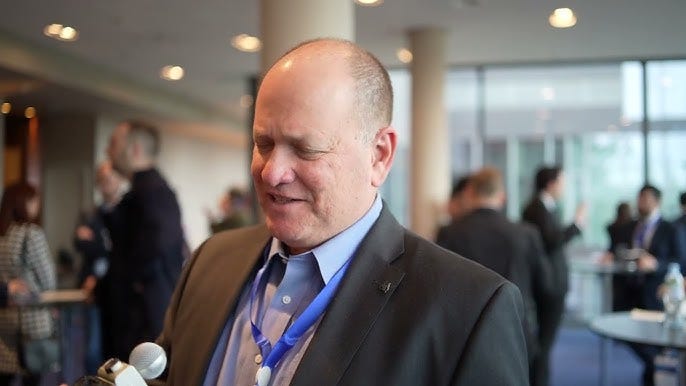
He served as a soldier in Lebanon in the ‘80s (“it’s perfect for guerrilla warfare. It’s mountains covered with bush and high trees”), worked in the Ministry of Strategic Affairs, and is a biographer of Moshe Dayan, who did as much as anyone to establish Israel’s position in the Middle East in its first 30 years of existence.
Iran
Harry: Someone like you has spent your career anticipating this war – “Judgment Day,” as the Iranians call it. How are you feeling about it?
Eitan Shamir: You and I had an interview just after October 7 [in 2023]. Being in that position, and now looking at how we are operating freely with the Americans over the skies of Iran, I think the closest description is to be an American at Pearl Harbor, and four years later to be fighting [from the air] over the mainland in Japan. That’s the transition. You bring the fight totally to the enemy shores. It took a very long time, a lot of effort, and a lot of perseverance.
Harry: How do you think it’s going?
Eitan Shamir: Overall it’s going very well. Going back to the Second World War analogy, if you ask me to look at the big battles or turning points, like Stalingrad or El Alamein, I’ll say we’ve started to turn the tide. We’re winning, but we still have a lot to go, and the verdict is not decisive. I’m not sure that we’ll have a Berlin moment.
Harry: The big difference with those conflicts is you had men moving through a continent trying to reach a destination. At the moment, you’re just bombing Iran, so how tenable do you think it is [to win that way]?
Eitan Shamir: The Allies just bombed Japan, right? Now, we are not destroying completely a nation like the Allies did to Japan or Germany. [America, beside dropping two atom bombs, killed an estimated 100,000 Tokyo residents in the early hours of March 10, 1945 during one carpet bombing run of the Japanese capital.] It’s a very pinpoint operation targeting specific targets. Everybody in the military and political leadership knew when the campaign started that the plan did not call for ground troops, other than maybe special operations. An invasion of Iran is not in the cards.
What we did in this air campaign—the Americans and Israel—was a combination never done before. For the first time in history, in the first strike, the entire political leadership, and a big part of the military, was taken out. Nobody can do that today other than the Americans and Israelis, and it required the two forces together to combine intelligence with striking ability.
Harry: I bring this up because you talked about the benefits of targeted killing in your 2013 paper. You noted that replacing skilled personnel in terrorist organisations is not easy and takes time. But if it’s one thing to take out key personnel in terrorist organisations like you did after October 7, it’s another to try and decapitate leadership in a population of 90 million. Can’t Iran just keep regenerating its leaders?
Eitan Shamir: The Israeli and American assessment was that hitting the Supreme Leader would shatter the Iranian regime in a very deep way. It did, but they also proved to be much more resilient than anticipated. They prepared for this, and we always ignore the religion part—the idea that martyrs are part of the struggle and they are ready to sacrifice themselves.
Harry: And they also devolved power beforehand, right? Do you feel like this transforms into a wider disintegration of the Iranian state, or are you resigned to the idea that there will always be another leader and the structure of Iranian government will remain intact?
Eitan Shamir: That’s a big unknown. I speak to Iranian experts, and most tell me that unlike toppling unpopular regimes like Saddam Hussein or Gaddafi—where you killed the leader and got chaos—in Iran, the regime is much more integrated. The mechanisms of integration are deeper and tighter. You have the IRGC and the Basij, but you also have a lot of people benefiting from the regime. We tend to see only the protesters, but a big part of Iranian society supports it. We don’t yet see the army joining the protesters, and you don’t see the protesters getting organised to use force. Hence, it’s very hard to see a regime change.
Harry: That’s why I came to speak to you, because I feel like what you’re left with, therefore, is Israel “mowing the grass”—destroying their military capabilities periodically.
Eitan Shamir: For Israel, the view was: we left the JCPOA [the Obama-era Iranian nuclear agreement] and there was no real alternative, while the Iranians were doing whatever they wanted under strict sanctions. After October 7 happened, which was not part of their planning, we slowly degraded their proxies. Hezbollah no longer holds a gun to our head. Syria fell, and we suddenly had this wonderful [air] corridor where we could go to Iran freely.
Harry: You mean they [Iran] no longer have a [weapons] corridor [to Lebanon]?
Eitan Shamir: When Assad was there, [yes] they had a corridor for weaponry. Iran also put a lot of air defenses in Syria, making it a hostile place to fly through [for Israel] to reach Iran. We conducted a campaign for almost 10 years to prevent them [Iran] from creating a second front in Syria. Once Assad was gone, everything was cleared and we had an open corridor [for Israeli missiles] to [reach] Iran. It was a big game changer.
Harry: And Assad only falls because Iran is weaker, so it’s all a consequence of October 7 and Israel’s reaction to it.
Eitan Shamir: Absolutely, it’s a chain reaction. First, the blows to Hezbollah—the [exploding] pagers operation and the “Arrows of the North” operation, which destroyed most of Hezbollah’s strategic weapons and put them on their knees begging for a ceasefire. Then Syria falls. Then there was the first Iranian missile attack in April [2025], followed by a modest Israeli retaliation on a Tehran radar to demonstrate that we can reach their assets. Then there was the limited [12-day] war in June [last summer], and now we get to this phase. Why did we get to this phase? There will be many articles written about what convinced Trump.
Harry: Well, Trump has wanted to hit Iran since he was 34. It goes back to Carter and the hostages; it had a big impact on him [in 1980].
Eitan Shamir: Exactly, it’s personal. When we had Biden, we were lucky to have a president who had the “old view” that Israel is a force for good, unlike the new progressive view that Israel is an apartheid state. Biden said he was a Zionist, even if his staff—like Robert Malley [the lead negotiator of JCPOA]—were all Obama staff. Personality counts completely in historical decisions. I think Trump remembered the humiliation America faced, he grew up with it. And it’s very personal because they [Iran] tried to kill him.
Harry: Let’s get back to the Israeli perspective.
Eitan Shamir: Our intelligence had concrete evidence that they were recuperating very quickly from June: their missile program and stockpiles. Netanyahu was saying we had this fantastic victory with years of quiet [ahead], but we looked at them and they were getting right back there.
Harry: The grass was regrowing.
Eitan Shamir: The grass was growing very quickly. This is not Hamas; Iran is a big state with capable people. They resumed activities around the nuclear program, preparing the ground to be able to re-enrich. They also found ways to reequip Hezbollah through Syria. We came out of June [2025] optimistic, and then reality hit. For Israel, this was a very bad situation. And then you have a president suddenly come and say, “I’ll do it. Go for it.”
Harry: You went in there last summer thinking you could do some damage, but it didn’t endure, so now you’ve got to do it again.
Eitan Shamir: Our reality has been mowing the grass since 1948. In an ideal world you will have an end to the war by signing [a document]…
Harry: Like in Europe or Japan [in 1945].
Eitan Shamir: Or Egypt [in ‘79], after rounds and rounds of negotiations, once Anwar Sadat [the Egyptian president] decided to go from the Soviet camp to the American camp and negotiated to get the Sinai Peninsula from Menachem Begin [Israel’s prime minister]. When Sadat found out that this was doable, it still took two very difficult years, if you read about the negotiations from the time he came to Jerusalem [in 1977].
It was two very difficult years where every few months there was a crisis and everything almost blew up. But you had a president who was fully invested—Jimmy Carter was fully invested in [the] Camp David [Accords]. He stopped everything for 12 days in the middle of the Cold War just to bring them together, and in the end, there was peace. And Sadat was killed for it [in ‘81].
Harry: So the point of Israeli strategy is you have to fight until each rival in the region makes peace, as some of your neighbours and Gulf allies have gradually done.
Eitan Shamir: Right. This war is shaking the whole Middle East and will likely have global ramifications. We don’t know what the future holds, but there are a few scenarios.
End state
Harry: What does victory look like?
Eitan Shamir: The best scenario is this regime falls. The minimum for Israel is degrading their capabilities severely. What you see now is serious degrading, taking them a lot of time to recuperate while they are already in an economic crisis. [As we were told Russia was in 2022.] However, there is a joker card that complicates everything: the 400 kilograms of enriched uranium. If the regime stays, they will justify needing an atomic bomb so they aren’t attacked next time.
Harry: Even if the missile capability is degraded, they may get that.
Eitan Shamir: Then you end up with a wounded, angry regime full of motivation for vengeance, and the capability to produce 10 to 12 small nuclear bombs like the primitive ones dropped on Hiroshima. You can probably hit them when they’re doing it, but this possibility exists.
Harry: What do you do about that?
Eitan Shamir: Trump can say, “I don’t care, I’m done. I’ve won,” and leave Israel with a nuclear-armed Iran. But I don’t think he will, because he is convinced the Iranians shouldn’t have a nuclear bomb. Maybe they’ll have to do a ground operation to get the 400 kilos before the war ends.
Harry: The US would be going into some of the most mountainous territory in the world, deep inland. If he goes in with ground troops and it goes wrong, that could be a Carter-level disaster that destroys his presidency.
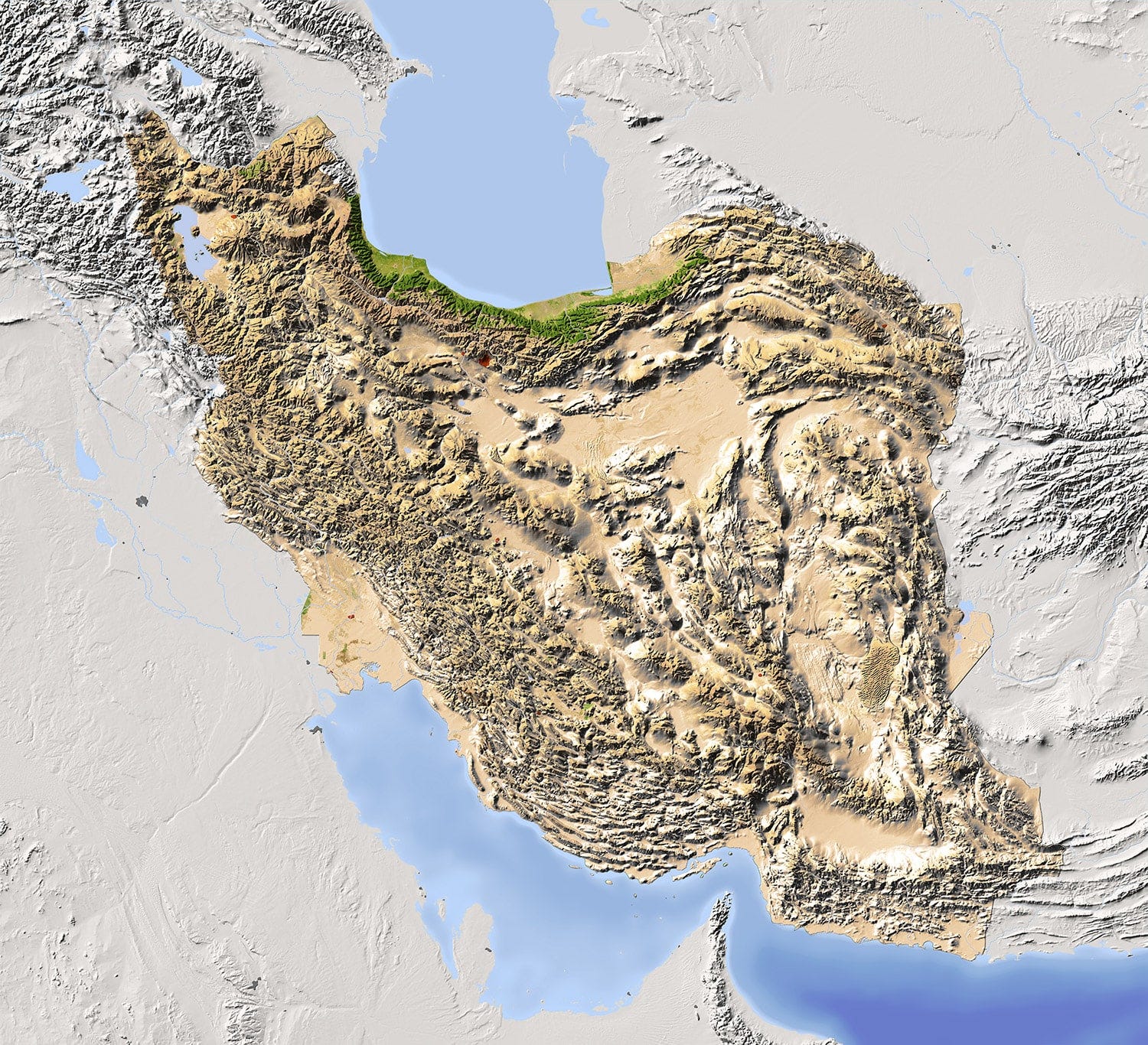
Eitan Shamir: It’s a special operation, not taking the whole of Iran. This is war, you don’t have a guarantee. But he’ll have two options: a regime with 10 atomic bombs, or taking the risk to make sure they don’t have them. It all depends on what the military people say about the certainty of intelligence and the ability to protect the forces. He will be told by his people if they have a solid plan with a high success rate, and sometimes you take the risk.
Harry: You said something to me last time, in 2023: “We are at war. You do not have full control over the flame.” Are you quite sanguine about escalation now, if escalation means a greater degrading of Iranian capability, or do you have any concern about it?
Eitan Shamir: I don’t have any concern that they [Iran] can escalate, because in principle, we have escalation dominance. But as you saw Trump tweet last night, he didn’t allow Israelis to escalate past a certain level [in striking Iranian gas production].
And I’m telling you this – I’m telling you this – he knew, and he approved, but he’s playing a game to prevent an escalation he doesn’t want, because of the impact on energy markets and the world economy. The Americans can open the straits, but it takes time and effort.
Harry: Despite the asymmetric threat of Iranian submersibles and drones? The shoreline is the length of South Vietnam.
Eitan Shamir: It is tough. From what I understand, the Americans can do it, but they need a lot of effort and time, and they’d rather not do it now. [This is an optimistic take.] If the Iranians continue to play this game, Trump is keeping the option to attack their oil and energy installations.
Harry: Do you think the Gulf states will come in?
Eitan Shamir: We’re waiting for Saudi Arabia. The Emirates are very much in, but everyone is looking at the Saudis, who are hesitating. The hope is that the Saudis will form a real coalition [of Gulf states] against Iran, with Israel and the United States, after the war.
Lebanon
Harry: So much of this is still to be decided. Turning to the other front, how do you feel about the prospect of going into Lebanon again, something Israel has been doing now for 44 years, perpetually going up to the Litani River?
Eitan Shamir: What’s the alternative? I’ve heard ideas about clearing all the Shia cities to pressure the Lebanese government to isolate Hezbollah, but the solution is ultimately in the hands of the Lebanese government.
Harry: But they’re weak. It’s a massive problem for you, this long-failing state torn in multiple directions.
Eitan Shamir: We probably don’t have a choice but to repeat. It’s a very complicated area with valleys and mountains. I served there as a soldier in Lebanon for years [in the ‘80s], and it’s perfect for guerrilla warfare. It’s mountains covered with bush and high trees.
Harry: And what about the tunnels?
Eitan Shamir: They have tunnels going from one house to the other, with rails and electric lifts to move rockets out of sight. But there’s a lot of good intelligence on that, and we’ve destroyed a lot of it. We will go back, and they will retreat. This is just the way it has to be.
Harry: Until someone strong enough helps you get rid of them?
Eitan Shamir: Every few decades, the strategic landscape shifts. Maybe the regime in Iran will fall, or Iran will become so weak it can’t pay its operatives. There is no final solution where we become Europe; this is the Middle East. You finish with one enemy, and immediately a new, worse radical pops up.
Harry: You have to fight, move forward, and see what happens next.
Eitan Shamir: You have to initiate, you have to develop. You always have to be a few steps ahead. [Ze’ev] Jabotinsky [one of Israel’s founding fathers] wrote this seminal article, “The Iron Wall” [in 1923]. He understood the Arabs were not going to accept Jewish immigration, so we needed an iron wall of solid defense until their attacks smashed against it and at some point they will concede. They will come to [accept] coexistence. The Arabs say we are like the Crusaders, who were here for 200 years winning battles but were eventually thrown out.
Harry: It’s the same idea with Israel—they’ve only been here 100 years, and we can get rid of them.
Eitan Shamir: It will take another 100 years… That’s the idea of the [Arab] radicals. Not everyone in the Arab world thinks that way; we have a wonderful relationship with the Emirates, people to people, and [the governments of] Egypt and Jordan came to terms with us. But it’s a difficult, messed-up region, even if you take Israel out of it, just look at the Arab Spring and the Syrian Civil War.
Gaza
Harry: Let’s talk about Hamas for a second. When we last spoke you talked about slowly squeezing Hamas in Gaza, like a python. Did you achieve your aims and destroy Hamas in the way you wanted to, both as an idea and in terms of capability?
Eitan Shamir: Capability-wise, no. We were aiming for a more decisive result where Hamas would no longer be in Gaza. But the constraints on Israel, like the hostage situation and international criticism, were severe. We kept it up until the guy in the White House [Biden] pressed the red button, and then we had to stop. Otherwise, we would have continued until Hamas was completely exterminated.
Harry: But how do you kill an idea?
Eitan Shamir: The purpose was not to kill an idea. Going back to the [mowing the] grass idea, you had an organization that ruled a territory with all the capabilities of a mini-state. The idea was to make sure it doesn’t control the resources needed to create strategic damage. Now, their potential to deliver strategic damage is almost nullified. They don’t have rockets or a military organization capable of mounting an offensive.
We neglected Gaza before because we had limited resources and Yahya Sinwar [the former military leader of Hamas, assassinated by Israel in 2024] used a deception plan, making us think he wanted to develop Gaza. We thought they wouldn’t try an attack because they knew we would destroy Gaza, but their logic was different. They were willing to sacrifice.
The “new view”
Harry: Do you fear you are losing control of the wider narrative about Israel? You talked about Biden’s “old view.” When did the old view become the new view [that Israel is an apartheid state, as Eitan put it]? Do you feel like you’re increasingly losing control of [what you see as] just conflicts?
Eitan Shamir: I don’t care about just conflict. I just care whether we survive.
Harry: But it may affect whether you survive right? If US support is required.
Eitan Shamir: How do we survive when we don’t have an end in sight? Of course we pay a heavy price. Some of our young people are leaving because they can’t stand it anymore. If you choose to live here, part of your life is struggle okay? You send your kids to the military. You pay heavy taxes because of the security. It’s not New Zealand, it’s not Australia. But look at Israel now compared to when [Israel’s first prime minister] Ben-Gurion grew up, to when I grew up. We are thriving—our GDP [per capita] is higher than the UK’s, and our tech start-up ecosystem is number three in the world. We have high birth rates too, the leading indicator of an optimistic society. [Eitan is a father of three, which is typical for Israel.]
The biggest threat to Israel internally is actually the ultra-Orthodox, who have a completely different vision for society. But regarding your question, the biggest blow Israel has received is public opinion in the US and Europe among young people. It is combined with new “woke” and post-colonial ideas that frame Israel as a coloniser and an apartheid state that should be dismantled. We didn’t realise how deep this was going into young minds, especially in US academia.
Harry: It’s the one war you’re losing.
Eitan Shamir: We are living in a paradox. On one hand, never did I envision that Israeli and American officers would sit in a command post side by side, coordinating joint operations over Iran. This is the pinnacle of Israeli-US relations. On the other hand, you look ahead and it’s very worrying to see what’s developing in the US.
Harry: Gavin Newsom [the leading 2028 Democratic contender] is saying you’re an apartheid state.
Eitan Shamir: Europe is less relevant, though Germany – the richest, biggest, strongest country in Europe – is still very relevant, and still very committed to Israel. And we have new partners like India, who provided materials for our weapons industry that nobody else gave us during the war [in Gaza], and Japan. But there’s no substitute for the US. A lot of Israeli power stems from US power and the special relationship [which Israel, unlike the UK, actually has with America].
Harry: Do you need to launch an information war?
Eitan Shamir: It’s very hard to compete with the combined forces of China, Russia, Qatar, and the money they put in, along with hundreds of millions of Muslims sharing these messages online. I would like to see a more centrist government in Israel. A lot of the damage is rhetoric by right-wing MPs talking to their domestic constituents. They are empty words, but it gets amplified online and used against us in The Hague. If we have a more moderate coalition, we can amend some of the damage.
Harry: Is Israel strong enough to survive now even without American support?
Eitan Shamir: No, I don’t think so. In the end, what flies over Iran is [US-made] F-35, F-15, F-16 [fighter jets]. In the end, the interceptors we shoot are developed here, but produced in the US. It starts with the US veto at the Security Council. If the Americans withdrew their support, everyone in the Middle East would smell blood. Israel is a regional power, but we are a small country with limited demographics and territories. This discrepancy is filled by US support, and without it, survival would be very, very difficult.
Harry: After October 7, the prospect of a two-state solution seemed to die overnight. Are we heading for one eventual state, with the Palestinians fitting within it?
Eitan Shamir: For now, neither side has the political will for a two-state solution. But Israel cannot swallow the Palestinian population. If we absorb them, we become a binational state with two communities that don’t want each other, which is a recipe for disaster like Yugoslavia. But if we evacuate large portions of the West Bank, we risk it falling into Iranian or Hamas hands, just like what happened in Gaza. So we are stuck.
Harry: So there’s no solution, and you just continue?
Eitan Shamir: Since I was born, everyone said the occupation is not sustainable. Now, 50 years later, it’s still there. It might be the least worst option. The Second Intifada [which began in 2000, and followed the First in 1987] made Israel realise the cost of occupation [of the West Bank], and that the people there don’t want us. But we also realised that their leaders are not seeking a permanent compromise. You either risk a binational state, or you hold out until things evolve and they change their hearts.
Harry: Until a different generation comes along.
Eitan Shamir: Think about the Zionists 120 years ago. The young people who came to Palestine in 1910, everyone told them the British Empire wasn’t going anywhere and wouldn’t give them a state. Then the Second World War came, the British were broke, and they left. There was a time that I was told that soon we were going to lose because of the demographics here in Israel. Then in one decade we got a million Jews from the Soviet Union [after its collapse, which has helped fuel Israel’s tech-led economy].
Harry: So your point is: hold out, win what you can, and wait for the next moment in history.
Eitan Shamir: Ben Gurion said, “If you are a Zionist, you have to believe in miracles.” You hold out, but you don’t just hold out, you take the best initiative you can, you play the best cards you have.
Harry: And the cards will change, and then you keep going.
Eitan Shamir: Exactly.
Here’s more from Bibi last night. I think it echoes much of what Eitan said.
You know, if people want to be naive, then they don’t see the kind of world we’re living in. In this world, it’s not enough to be moral, it’s not enough to be just, it’s not enough to be right. You know, one of the greatest writers of the 20th century, someone that I admire a lot, was the historian Will Durant.
Now, he wrote many volumes. I read most of them. He also wrote The Lessons of History, very brief, [a] 100-page book in which he said, well, history proves that, unfortunately and unhappily, Jesus Christ has no advantage over Genghis Khan, because if you are strong enough, ruthless enough, powerful enough, evil will overcome good, aggression will overcome moderation.
So you have no choice. If you look at the world as it is today, you have to be blind not to see that the democracies, led by the United States, have to reassert their will to defend themselves and to oppose their enemies in time, while there is still time, before the jarring gong of danger wakes them up and wakes them up too late.
This is where we are now. We have to be strong. We have to be armed. We have to be more powerful than the barbarians, or they will not be merely at the gate, they’ll crash our gates and destroy our societies. That’s what Israel is doing now with the United States. And I’m very proud of the fact that the Israeli people are standing strong… We rose from October 7 – our people, our soldiers – rose like lions, but in protecting ourselves and in joining with our great American friends, we’re also protecting the entire world. Thank you. Next question.
You can file this under The Power of Nightmares.